
Hydrophobic wall coatings are a fast growing solution for UK property owners.
TL;DR. These treatments are breathable, water repellent treatments applied to external walls. They stop rainwater being absorbed into brick, stone or render while still letting trapped moisture escape. Done properly, they cut penetrating damp, slow freezing and thawing damage and improve the thermal performance of solid walls. At Home Building & Surveying Company we install four systems: SecoFLEX for a coloured hydrophobic coating, SecoTHERM for a clear hydrophobic coating that preserves the original look, K Rend for a fresh through coloured silicone render, and ThermoSilicone for properties where insulation is also a priority. All four are breathable, hydrophobic, and built to last. None of them is a fix for rising damp, internal condensation, or structural defects. Those need separate treatment first.
If your external walls are dark, cold, salt stained or eating heat in winter, the cause is usually one thing: rainwater is soaking into the masonry. These coatings are designed to stop that. This guide explains how they work, the four systems we install at HBSC (SecoFLEX, SecoTHERM, K Rend and ThermoSilicone), and the situations where a coating is the right answer and the situations where it isn’t.
What is a hydrophobic wall coating?
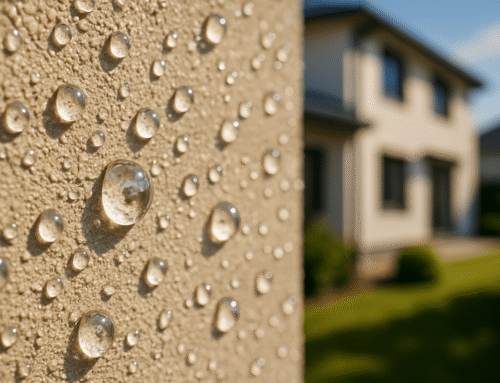
A hydrophobic wall coating is a breathable, water repellent treatment applied to external masonry. It penetrates the surface of brick, stone or render and creates a microscopic barrier that causes rainwater to bead and run off, instead of soaking in. Unlike traditional masonry paint, a quality hydrophobic coating remains vapour permeable. That means moisture trapped inside the wall can still escape outwards. Breathability is what makes the difference between a treatment that protects the building and one that traps damp inside it.
The technology has been used in mainland Europe for decades and is now well established across the UK, from coastal homes around Bournemouth and the south coast to Victorian terraces in London and Manchester, and Cotswold stone properties in Gloucestershire. Particularly effective on solid wall properties built before 1930 that lack a cavity.
How do hydrophobic wall coatings work?
There are three things going on at a microscopic level:
The result is a wall that stays dry from the outside but doesn’t trap internal moisture. That matters because trapped moisture is what causes spalling brickwork, blown render, salt deposits and freezing and thawing damage.
SecoFLEX, SecoTHERM, K Rend or ThermoSilicone: which system is right for your property?
At Home Building & Surveying Company we install four hydrophobic wall systems. All four are breathable, all four repel rainwater, and all four are designed for the UK climate. The right one for your property depends on the condition of the existing wall, the finish you want, and whether you also want a thermal upgrade.
| System | What it is | Best for | Typical lifespan |
|---|---|---|---|
| SecoFLEX | A pigmented, breathable, hydrophobic wall coating that refreshes the colour of the existing wall while protecting it from rainwater. | Properties where the existing wall is sound and the owner wants a refreshed colour finish plus full water repellence. | Up to 20 years |
| SecoTHERM | A clear, breathable, hydrophobic wall coating that protects the wall without changing its appearance. | Heritage, period, and stone properties where the original look must be preserved. The right answer when you want protection without changing the colour. | Up to 20 years |
| K Rend | A silicone enhanced, through coloured render system applied as a new exterior finish. | Properties where the existing render is tired or damaged and you want a fresh, low maintenance look with built in hydrophobic and breathable performance. | Up to 30 years |
| ThermoSilicone | An insulated render system that adds an external layer of insulation finished with a hydrophobic, breathable silicone topcoat. | Properties where thermal performance is a priority alongside weather protection. Strong choice for solid wall homes losing significant heat through the walls. | Up to 30 years |
The right specification depends on the substrate, exposure, and finish you want. A free survey will identify which system is suited to your property.
of heat loss in uninsulated UK homes is through the walls. For solid wall homes the figure is higher still. Keeping walls dry is one of the most cost effective ways to lift thermal performance.
Source: Energy Saving Trust
What are the benefits of treating external walls with a hydrophobic coating?
- ✓Reduces penetrating damp. Rainwater no longer soaks through to the inside face of the wall, which is the most common cause of cold spots and patchy interior staining on solid wall homes.
- ✓Improves thermal performance. A dry wall insulates significantly better than a wet one. Saturated masonry can lose substantially more heat than dry masonry, which is why keeping rainwater out of solid walls is a real energy saving move.
- ✓Slows freezing and thawing damage. Water trapped in masonry expands when it freezes, blowing brick faces and cracking render. A hydrophobic coating dramatically reduces water absorption.
- ✓Self cleaning effect. Rain washes dust and atmospheric pollution off the beaded surface, keeping the façade visibly cleaner for longer.
- ✓Long service life. SecoFLEX and SecoTHERM coatings carry a 20 year manufacturer guarantee, and K Rend is backed by a 30 year BBA guarantee. ThermoSilicone silicone render systems typically last 25 to 30 years.
- ✓Maintains breathability. Unlike sealant paints or impermeable coatings, the wall continues to release internal moisture vapour, critical for older buildings without a damp proof course (a common situation in heritage and pre 1930 properties).
When does a water repellent treatment actually solve the problem?
Water repellent treatments are the right tool when the moisture is coming from the outside in. Specifically:
- ✗Solid wall properties (typically pre 1930) suffering damp on west or south west facing elevations exposed to driving rain. Common on Victorian terraces across Greater Manchester, Leeds and Birmingham, and on Cotswold stone properties across Gloucestershire and Oxfordshire.
- ✗Coastal or high rainfall locations where wind driven rain saturates masonry. Common across the south coast (Bournemouth, Poole, Portsmouth), London suburbs with exposed elevations, and the north west coast.
- ✗Buildings with porous brick or stone showing salt deposits, spalling or visible water staining.
- ✗Properties where solid wall insulation has failed or been ruled out, and the goal is to keep the existing wall dry.
- ✗Heritage and listed properties where the appearance must be preserved (SecoTHERM is the right system here, as a clear coating).
When is a water repellent treatment the wrong answer?
This is the part most articles skip. A hydrophobic coating cannot fix problems that originate inside the building. If you apply one over the wrong fault, you can make things worse by trapping internal moisture against the inside of the masonry.
- ✗Rising damp. Caused by groundwater wicking up from below. Needs a damp proof course injection, not an external coating.
- ✗Condensation. Caused by indoor humidity hitting cold internal surfaces. Needs ventilation upgrades, see our DMEV vs PIV guide.
- ✗Plumbing leaks. Hidden internal leaks need finding and fixing first.
- ✗Structural defects. Cracked render, failed pointing, broken gutters or missing flashings must be repaired before any coating is applied.
- ✗Cavity wall properties with cavity wall insulation problems. Read our cavity wall insulation damp guide first.
Diagnose first, treat second. A proper damp survey will tell you which type of moisture you’re dealing with: rising, penetrating, condensation or a combination. Only then is it sensible to specify a treatment. Coating over the wrong fault is one of the most common and most expensive mistakes we see.
What affects the cost of a hydrophobic wall coating?
Every property is different, so the only sensible way to get a price is a free survey. That said, these are the main variables that will shape the final quote:
- Wall area and access. The size of the elevations being treated and whether scaffolding or a cherry picker is needed for safe working at height.
- Substrate condition. Cleaning, repointing, or render repairs may be needed before coating goes on.
- System choice. SecoFLEX or SecoTHERM as a coating, K Rend as a full new render, or ThermoSilicone where you also want insulation. Each suits different starting points.
- Number of coats. Most quality systems require two coats for full performance.
- Substrate type. Smooth render takes less material than heavily textured brick or stone.
- Finance. Larger jobs can be spread over time, see our finance options.
How are hydrophobic wall coatings applied?
A correctly specified application follows six stages:
Application matters as much as product choice. A premium coating sprayed onto a dirty or wet wall will fail within 2 to 3 years. Always check that the contractor has a documented method statement and is using a manufacturer approved system.
How long do hydrophobic wall coatings last and what maintenance is needed?
With a correct application onto a properly prepared substrate, SecoFLEX and SecoTHERM both carry a 20 year manufacturer guarantee. K Rend is backed by a 30 year BBA certification. ThermoSilicone silicone render systems typically last 25 to 30 years. Maintenance is minimal across all four:
- Visual check annually for any areas of damage or staining.
- Light pressure wash every 3 to 5 years if the property is in a polluted or shaded location.
- Spot reapplication if any localised damage occurs (impact, render repair, etc.).
There is no need to repaint or recoat between full reapplications.
When to choose SecoFLEX, SecoTHERM, K Rend or ThermoSilicone
The decision usually comes down to four questions: how sound is the existing exterior, what finish do you want, does the original look need to be preserved, and do you also need to improve thermal performance?
- Choose SecoFLEX when you want a refreshed coloured finish on the existing wall, alongside full water repellence. SecoFLEX is a pigmented hydrophobic coating that gives you a clean new colour while protecting the substrate.
- Choose SecoTHERM when you want to preserve the original look of the wall. SecoTHERM is a clear hydrophobic coating, so the natural brick, stone or render still shows through. The right choice for heritage and period properties. Read more about SecoTHERM on stone and brick exteriors.
- Choose K Rend when the existing render is tired or damaged and you want a fresh, through coloured exterior finish. K Rend is a new silicone enhanced render that gives the property a clean, modern look while delivering hydrophobic and breathable performance.
- Choose ThermoSilicone when you also want to lift thermal performance. ThermoSilicone adds an insulation layer beneath a hydrophobic, breathable silicone finish, which is particularly effective on solid wall properties losing significant heat through the walls.
- Combine systems on properties where different elevations have different needs. A free survey will tell you what’s right for each wall.
Hydrophobic wall coatings FAQs
Are hydrophobic wall coatings breathable?
Will a water repellent treatment stop rising damp?
Can water repellent treatments be applied to listed or period buildings?
How long does a treatment take to dry?
Do water repellent treatments change the appearance of the wall?
Can I apply a water repellent treatment myself?
Do they reduce energy bills?
RATED ACROSS THE UK




Book your free wall coatings survey
If you’re seeing penetrating damp, cold external walls, or salt staining on the inside face of brickwork, the first step is a proper survey. We’ll identify what’s causing the moisture, recommend the right system, and give you a written quote with no obligation.
Explore our systems: SecoFLEX · SecoTHERM · K Rend · ThermoSilicone